
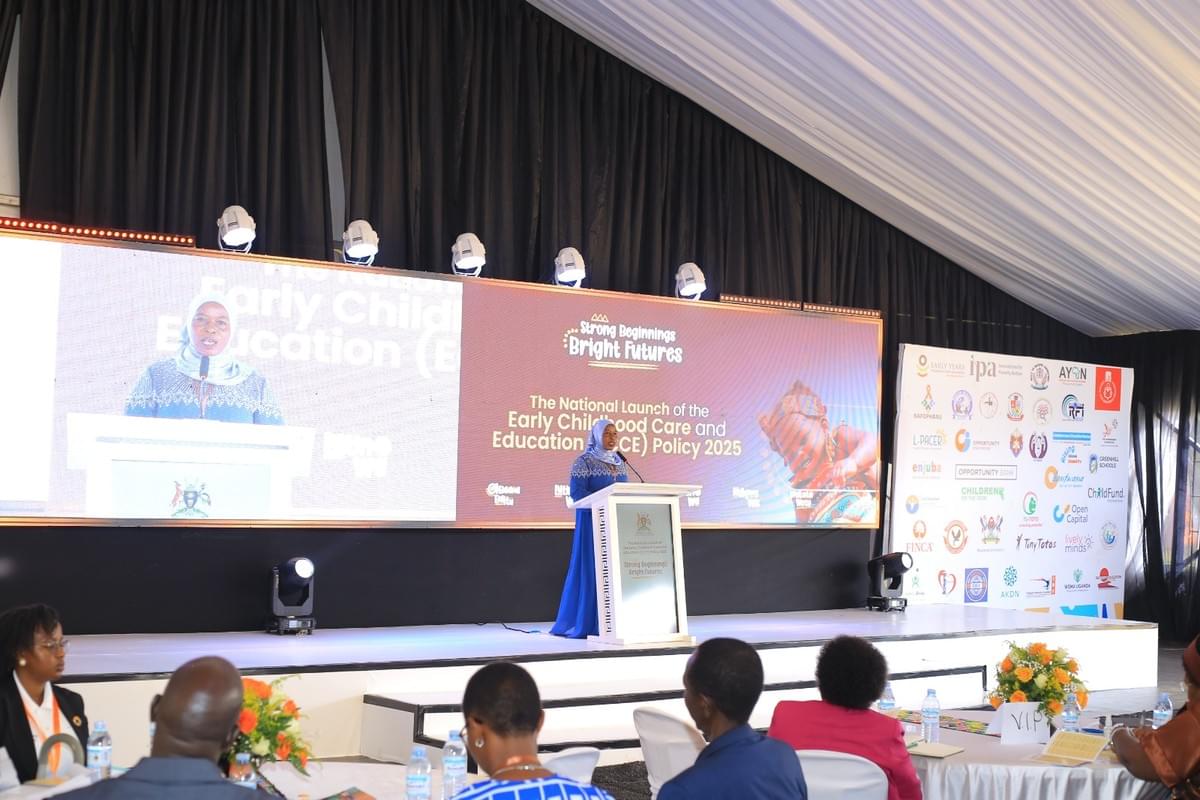
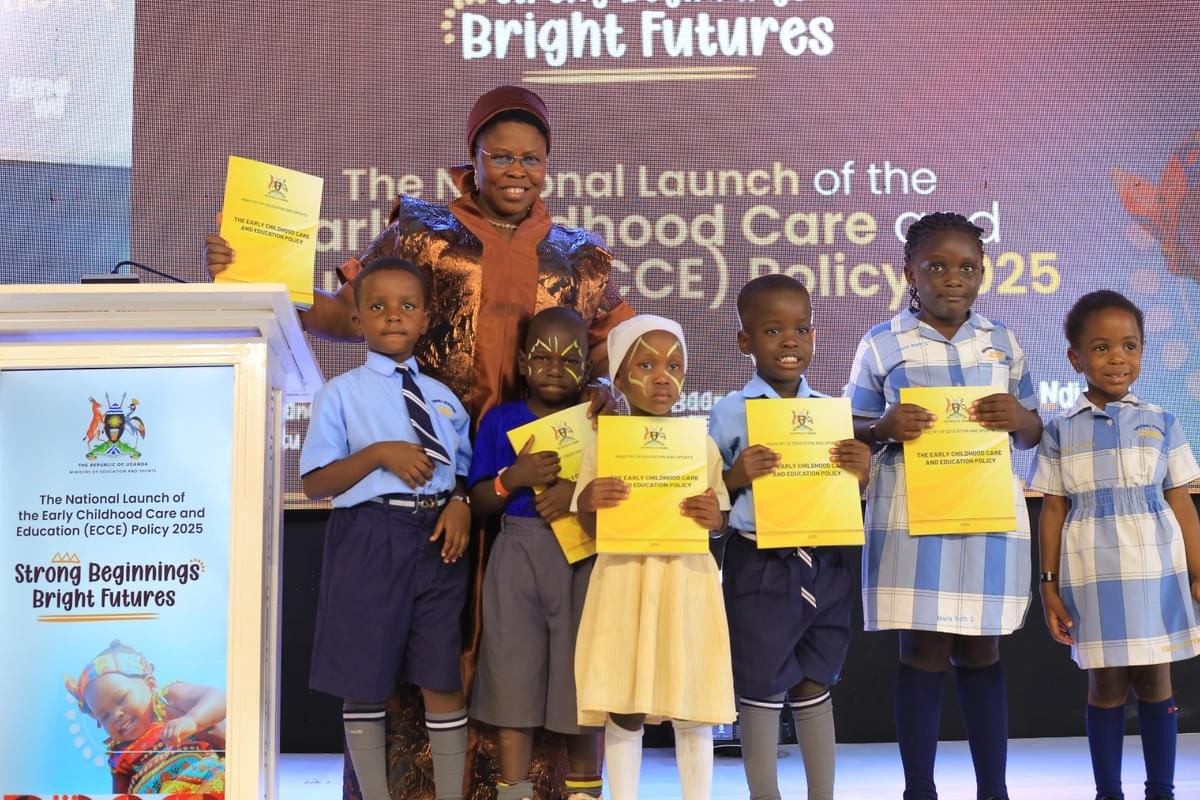
On Thursday, 30th April, Uganda officially launched the Early Childhood Care and Education (ECCE) Policy 2025. The policy, which has been under discussion since 2015, is remarkable for several reasons but most importantly the fact that it speaks directly to the first six years of a child's life.
Why This Policy Was Necessary
Uganda's pre-primary education landscape has, until now, operated largely without a coherent guiding policy. The Education (Pre-Primary, Primary and Post-Primary) Act Cap 247 recognised pre-primary education as the first level of Uganda's education system, but the policy framework to govern it has been missing until now.
By 2019, there were approximately 3.9 million children eligible for pre-primary education in Uganda. Of those, 1.84 million, nearly half, were not accessing any form of ECCE programme. Of the 28,208 pre-primary centres operating at the time, only 4,123 (just 14.6%) were formally registered. Research cited in the policy found that 85% of centres were unregistered and 58% failed to meet minimum standards for operation.
Behind those figures are real developmental consequences. The policy cites evidence that the brain grows to 90% of its adult size by age five, meaning the years before school are not a waiting room for education; they are education itself. The same evidence shows that inadequate ECCE in the early years contributes to class repetition, delayed primary enrolment, and long-term learning deficits. By 2016, Uganda recorded over 680,000 primary repeaters costing the education system more than six billion shillings annually. The ECCE gap is not just a moral concern; it is an economic one.
The policy was also driven by Uganda's international commitments to the UN Convention on the Rights of the Child, the African Charter on the Rights and Welfare of the Child, and the UN Sustainable Development Goal 4.2, which calls for universal access to quality early childhood development and pre-primary education by 2030.
Who is responsible for what
One of the policy's clearest contributions is its delineation of roles. The Ministry of Education and Sports (MoES) is the lead agency and is responsible for standards, curricula, licensing guidance, teacher development, inspection and monitoring. But responsibility is distributed.
The Office of the Prime Minister coordinates multi-sectoral ECCE programmes and advises on nutrition. The Ministry of Local Government ensures that district and municipal governments fulfil their ECCE mandates. The Ministry of Gender, Labour and Social Development covers child protection and social welfare. The Ministry of Health covers nutrition, immunisation and health referrals.
At the local level, City, District and Municipal governments are required to assign specific staff responsibility for ECCE within their structures. Non-state actors, faith-based organisations, civil society, the private sector, development partners, all have defined roles, with the policy making clear that ECCE centre establishment and management remains primarily a non-state responsibility.
What This Means for the ECCE Community
For those of us working in early childhood, whether in classrooms, community spaces, policy rooms or living rooms, the ECCE Policy 2025 is a framework to hold stakeholders accountable to.
Here is what we think the policy's launch should prompt, concretely:
For ECCE centre operators: Begin the licensing process now. Understand the Basic Requirements and Minimum Standards and conduct an honest audit of your centre's compliance.
For teachers and caregivers: Engage with the National Qualification Framework when it is published. Advocate for CPD opportunities within your institution. Your professionalisation is now a policy commitment.
For parents: Ask your child's centre whether it is registered. Ask about its inspection record. Engage with parenting programmes as they are introduced. Your role is written into this policy.
For local government officials: The policy assigns you direct responsibility for licensing, inspection and support supervision. Build ECCE into your district planning and budgeting cycles.
For civil society and development partners: There is now a coherent national framework to align with. Fragmented, parallel ECCE programmes that work outside rather than within the policy architecture will be increasingly hard to justify.
At enjuba, we believe the first years of life are the most consequential and the most underserved. We will be sharing resources on this policy in the weeks ahead: simplified guides for parents and caregivers, toolkits for centre operators navigating licensing, and discussions on the pedagogical implications of the policy's learning frameworks.
We also want to hear from you. If you are a teacher, parent, centre operator, or local government official engaging with this policy on the ground, we would like to know what you are experiencing, the progress, and the gaps. This policy is only as strong as its implementation.
Follow us on Instagram at @enjuba and join the conversation using #ECCEPolicy2025.