
There is a saying that it takes a village to raise a child. That the healthy and safe upbringing of any child requires the shared effort of an entire community rather than those of a parent, teacher or local leader acting in isolation. Every school day, children are roused from sleep by their parents and prepared to go and learn. The children make these journeys to school sometimes within their immediate communities and sometimes in the next village or town center. Upon arrival, they are under the watchful eye of their teachers, peers and those of the immediate school community. This is perhaps what the aspirational village ought to look like. Yet, as economic pressures make it increasingly difficult for families and communities to share this responsibility, we have come to leave much of the work of raising and educating children to those paid to do it. In doing so, we risk forgetting that a school is only one part of the village. Here is how our Teacher coaching model is rebuilding the village.
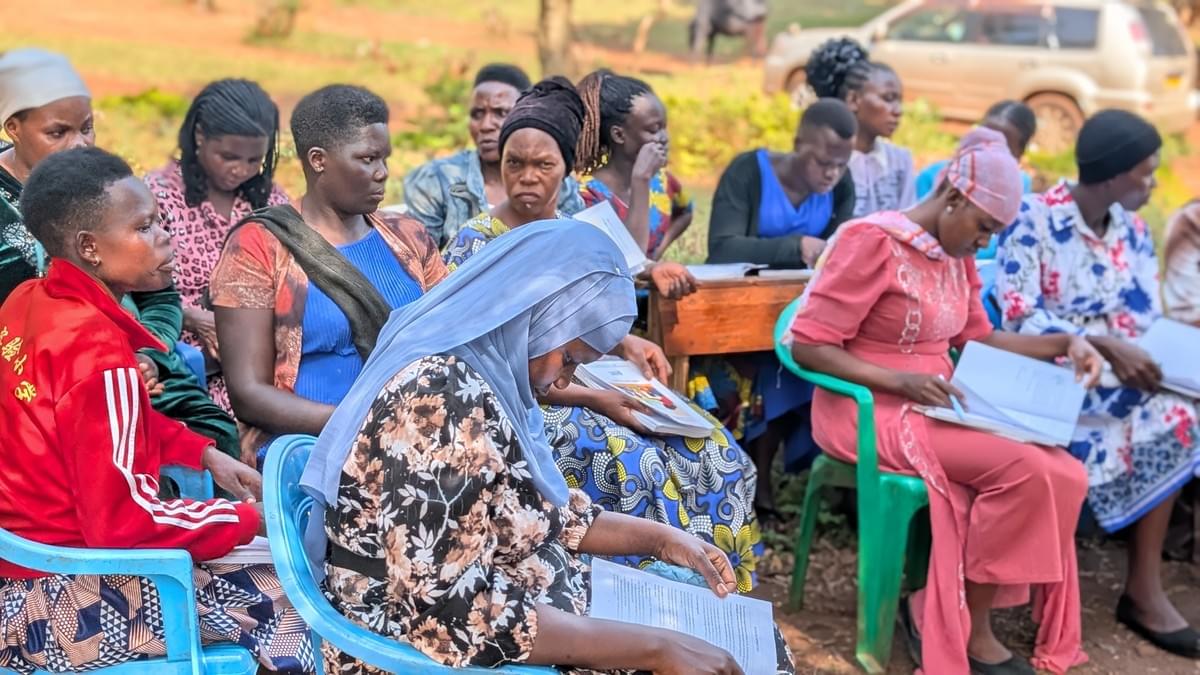
Why schools need parents
When schools and families work together, children benefit. Teachers tell parents how a child is doing in class and interacting with friends. Parents, in turn, share information about things that affect learning, such as a child's health, sleep and interests. When a child struggles, both can agree on how best to support them, ensuring that the child receives consistent encouragement at school and at home.
This partnership is particularly important in the early years, when children depend on adults for almost everything. It is also when many of the habits and foundations for lifelong learning are formed.
Parent-teacher meetings are one of the simplest ways to build this partnership. Yet, at Smart Junior School and Magamaga Superior Primary School, both part of enjuba's Teacher Coaching Programme, these meetings had repeatedly attracted only a handful of parents. Consequently, the communication gap between schools and families continued to grow, and affecting the support children received in their learning.
What Akampa did
In each of the schools, Akampa Secret, our assigned teacher coach began by engaging the school heads, management committees and Parent-Teacher Association (PTA) chairpersons at both schools. She shared her plans with them and worked with them to encourage greater parental participation.
She also introduced earlier invitations and formal letters to parents, replacing the reliance on word of mouth. These changes helped communicate the importance of the meetings and gave parents more time to make arrangements to attend.
What is different now
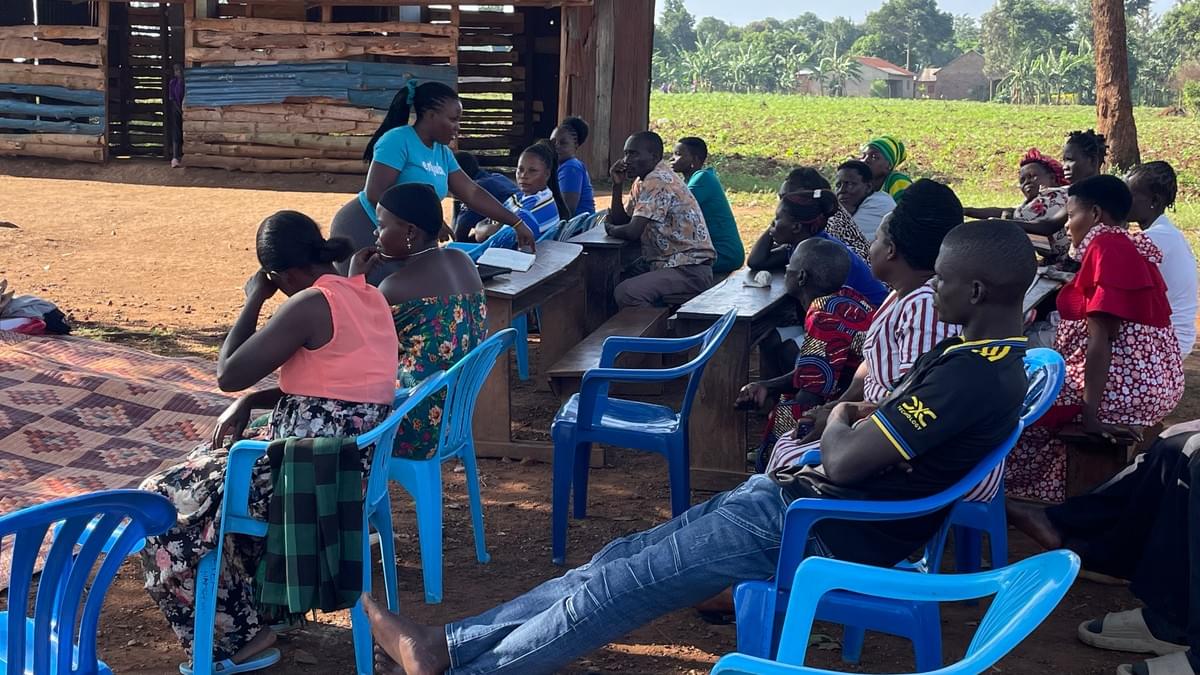
The results for this speak for themselves. Between 1st and 14th October alone, Secret visited five schools in Magamaga town council and met over 80 parents and caregivers.
Attendance has improved compared to the previous term, and fathers have begun attending meetings, something that had not happened before. Parents who come to the meetings are also more familiar with enjuba's programmes and are grateful for the support their children receive.
At Magamaga Superior Primary School, for instance, parents had the opportunity to learn how teachers make their own teaching and learning materials and use them to keep lessons active and engaging.
One parent at Smart Junior School expressed their appreciation:
"I thank enjuba for the commitment of providing porridge to our children. The headteacher told me that you also brought some books for children to read and that you will bring more. We welcome any support and we would like that your programs stay."
Why this matters beyond Magamaga
Secret's work, like that of all our coaches is a demonstration shows that a coach's influence goes past the classroom. By building relationships with school leadership, teachers and parents, she helps create a community of support around each child, that continues to nurture learning even when the coach is not present. This is the kind of village we want every early childhood development (ECD) centre in Uganda to have.
Our ambition is for every Ugandan child to be able to read and write. We are working towards this by expanding access to books through our library programme, simplifying the curriculum in partnership with the National Curriculum Development Centre (NCDC), and strengthening teaching through a growing network of teacher coaches who support teachers to plan and deliver effective lessons.
Building this village takes all of us. Join us in supporting these programmes and help create the conditions every child needs to learn, grow and thrive. Click here to be part of the village.